tagged  ASP.NET, drag and drop, pdf, upload in Announcements, RAD PDF
ASP.NET, drag and drop, pdf, upload in Announcements, RAD PDF Wednesday, December 17, 2014 at 10:00AM 2014 has seen a number of significant updates to RAD PDF, our ASP.NET PDF editor, form filler and viewer. This December here at Red Software we're excited to announce the release of version 2.26.
With this update users can now easily upload files using drag and drop when appending or adding an image. RAD PDF automatically detects whether or not the client browser supports drag and drop, only showing this modern browser feature to clients which support it. Modern browsers will also see information about the upload progress (and how much longer RAD PDF expects it will need).
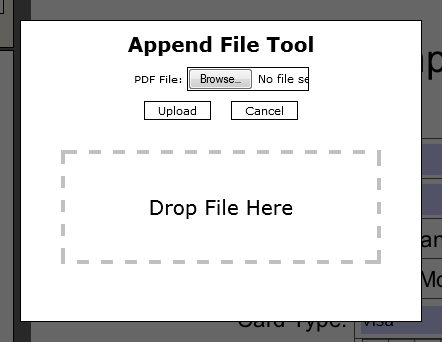
We've also improved the way in which large files are handled by RAD PDF. Reducing RAD PDF's memory footprint, these internal improvements will improve performance especially on servers with limited memory resources. We've added settings like the new MessageDataSizeThreshold property to allow these improvements to be tweaked when necessary.
Version 2.26 also includes an improved DocumentKey generation scheme. While the existing keys are strong, we've made them a little stronger without performance impact.
This release also includes several bug fixes.
This version is available free of charge to all Red Software customers with an active Maintenance Plan.
ASP.NET, drag and drop, pdf, upload in Announcements, RAD PDF Tuesday, September 9, 2014 at 9:00AM Red Software is excited to release version 2.25 of the PDF editing and viewing ASP.NET component, RAD PDF! A new printer settings dialog now allows users to print page ranges, improving the user experience as well as server performance (as non-desired pages are no longer rendered). This update also includes rendering improvements across the board, including CMap (Character Map) support.
Version 2.25 also introduces several minor new features, including improved layout metrics for multilined PdfTextFields using fonts not installed on the client.
This release also includes several bug fixes.
This version is available free of charge to all Red Software customers with an active Maintenance Plan.
ASP.NET, CMap, pdf, pdf renderer, printing in Announcements, RAD PDF Wednesday, June 18, 2014 at 1:30PM UPDATE: Red Software is no longer affiliated with PDFescape, but this feature is still available in our RAD PDF technology. Edit your PDF with our online implementation, free of charge! (up to 50MB and 2500 pages)
You asked, we delivered!
Red Software is happy to announce that we've increased the page limit from 200 to 500 pages for PDFescape Premium members!
Effective immediately, all PDFescape Premium members can load files up to 500 pages long.
This improvement is delivered free of charge and without changes to our pricing structure.
pdf, pdfesape premium in PDFescape Tuesday, June 17, 2014 at 12:20PM Red Software is excited to announce version 2.23 of RAD PDF, the PDF editor, PDF form filler, and PDF reader for ASP.NET. This release improves RenderOnDemand performance and adds visual improvements for browsers with blend mode support (e.g. Chrome Canary*, Firefox Nightly*)
Version 2.23 also updates how PDF form field names containing periods are handled. In previous versions, RAD PDF did not accept periods in the name provided. RAD PDF now automatically creates the necessary non-terminal fields to accommodate such naming.
We've also added a new CustomData property to the PdfDocument class. This new property allows PDF output to be tagged with custom data which can then again be accessed when a PDF is again loaded into RAD PDF, allowing RAD PDF to support an even wider range of work flows.
This release also includes several minor bug fixes.
This version is available free of charge to all Red Software customers with an active Maintenance Plan.
*These are experimental browser builds and may require additional configuration to enable blend modes. It is our hope though that CSS blend mode support becomes a widely implemented standard, which RAD PDF will be ready for.
ASP.NET, Forms, pdf in Announcements, RAD PDF Thursday, April 3, 2014 at 11:53AM Today, Red Software is proud to announce version 2.21 of RAD PDF, the ASP.NET PDF viewer and PDF editor. This release adds a new tool as well as improvements to the RAD PDF maintenance routinues.
First, the new Hand Scroll Tool allows users to pan and scroll the pages of PDF files using either their mouse or touch. The new HideHandScroll property also allows this tool to be optionally disabled.
Additionally, the RAD PDF maintenance routinues have been optimized to improve concurrency as well as speed of execution. For large deployments, these additional enhancements help servers running RAD PDF handle additional load.
This release also includes a number of minor bug fixes including iOS improvements and a JPEG 2000 decoding issue.
This version is available free of charge to all Red Software customers with an active Maintenance Plan.
ASP.NET, PDF hand scroll, RAD PDF maintenance, pdf in Announcements, RAD PDF